Research use only — not for human consumption. Not evaluated by the MHRA or FDA.
Peptides
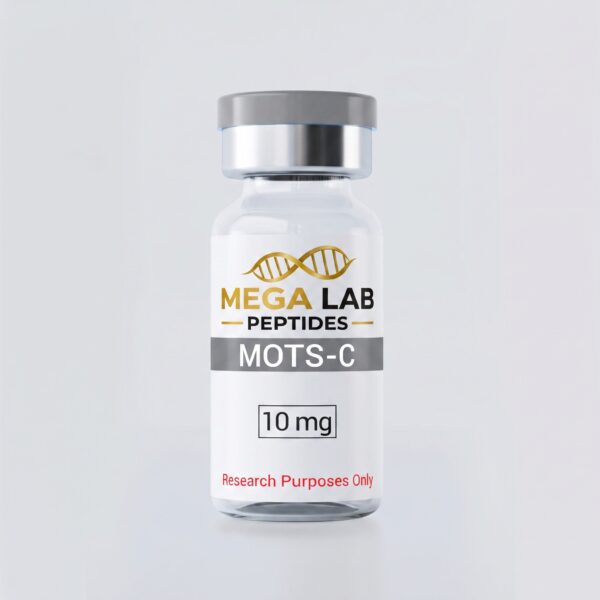
MOTS-C 10mg
10 mg · Lyophilised powder
Order by 2pm for same-day dispatch. Free UK next-day tracked delivery.
| Form | Lyophilised powder |
|---|---|
| Purity specification | ≥ 99% by HPLC (supplier specification) |
| Storage | −20°C lyophilised · 2–8°C once reconstituted |
Research Overview
What MOTS-c is
MOTS-c (mitochondrial open reading frame of the 12S rRNA type-c) is a 16-residue peptide encoded within the mitochondrial genome rather than the nuclear genome. It was identified in 2015 by Lee and colleagues at the University of Southern California, adding to a small group of mitochondrial-derived peptides that includes humanin. Its molecular weight is approximately 2,174 Da. The discovery that a short open reading frame inside a ribosomal RNA gene could encode a functional peptide was itself a notable finding in mitochondrial biology.
Research background
The published research on MOTS-c centres on metabolic regulation, with studies in cell culture and mouse models examining AMPK signalling, folate–methionine metabolism and the peptide’s translocation to the nucleus under metabolic stress. It has also been examined in the context of exercise physiology and ageing in animal models, and a small number of early human studies have been published. Megalab supplies MOTS-c for in-vitro research only.
Specification
Each vial contains 10mg of MOTS-c as a lyophilised powder. Purity is verified by HPLC at ≥99% on every batch. The current lot is shown in the batch record on this page where published, and a Certificate of Analysis is available on request.
Handling and storage
Store unopened vials at −20°C and protect from light. Allow to reach room temperature before opening. Reconstitute with bacteriostatic water added slowly down the inside of the vial, swirling gently until dissolved. Store reconstituted solution at 2–8°C and use within 30 days. For longer holding, aliquot before refrigeration to avoid repeated warming.
Supplied for laboratory research use only.
Reconstitution & storage
- Diluent
- Bacteriostatic water, added slowly down the inside wall of the vial; swirl, do not shake.
- Lyophilised
- Store at −20°C, away from light and moisture.
- Reconstituted
- Refrigerate at 2–8°C.
Frequently Asked Questions
What is a mitochondrial-derived peptide?
A peptide encoded by a short open reading frame within mitochondrial DNA, rather than by a nuclear gene. MOTS-c and humanin are the best characterised examples.
Where was MOTS-c discovered?
It was described in 2015 by the Lee and Cohen group at the University of Southern California, in a paper published in Cell Metabolism.
How should MOTS-c be stored after reconstitution?
At 2–8°C, used within 30 days. Aliquoting the solution reduces the number of times the stock is warmed.